01
01
Small scale social infrastructure
OCT-DEC 2024
OCT-DEC 2024
An accelerated, low-cost strategy to temporarily bring social infrastructure into a neighborhood to foster community interaction and inform future development.
TEAM
TEAM
Owen Sims
Noah Young
Yichen Hu
Nate Coplan
Noah Young
Owen Sims
Yichen Hu
Nate Coplan
ROLE
ROLE
Strategist
Interface designer
Project manager
Strategist
Interface Designer
Project Manager
SKIP TO PROTOTYPE
(scroll to explore)
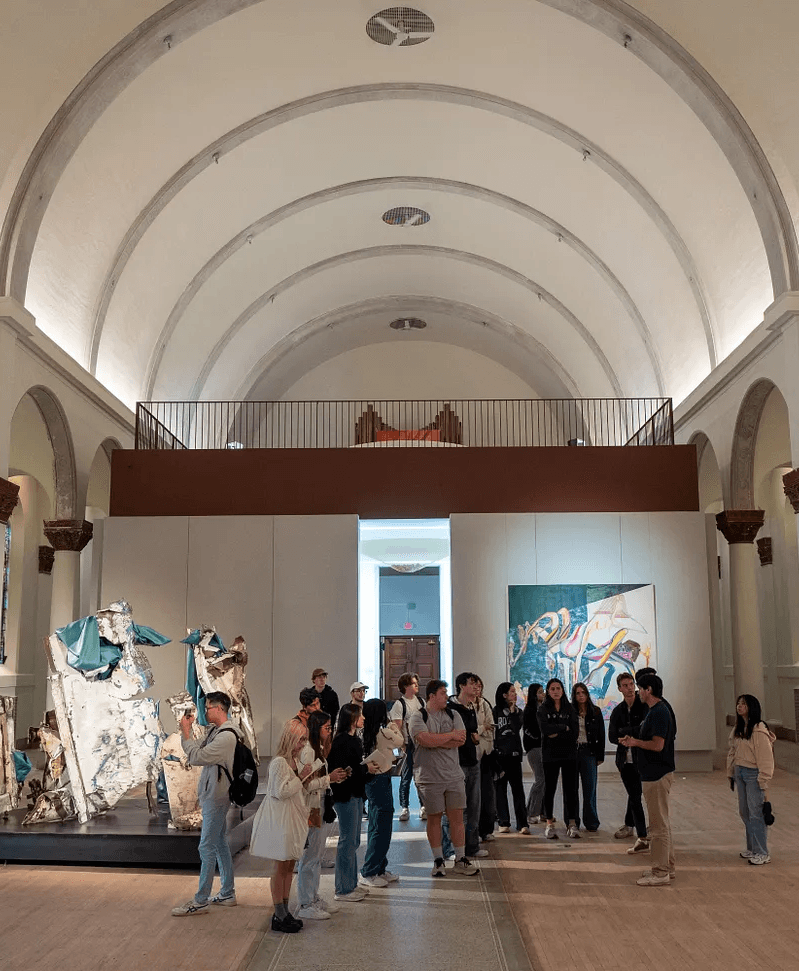
This project is part of the final studio in the Urban Technology program, which challenges us to envision a (near or distant) future for Little Village and to design strategically towards that future.
Little Village is a growing cultural and artistic neighborhood in Detroit with current development efforts led by the Library Street Collective. The Collective aims to revitalize this historically disinvested neighborhood through the creation of parks, art galleries, educational spaces, commercial spaces, and housing.
As a class, we conducted extensive place-based research, gathering images, interviews, surveys, census data, and on-site observations. After sharing and synthesizing our collective findings, each of us independently developed a project proposal that identifies an opportunity space grounded in this research.
This project is part of the final studio in the Urban Technology program, which challenges us to envision a (near or distant) future for Little Village and to design strategically towards that future.
Little Village is a growing cultural and artistic neighborhood in Detroit with current development efforts led by the Library Street Collective. The Collective aims to revitalize this historically disinvested neighborhood through the creation of parks, art galleries, educational spaces, commercial spaces, and housing.
As a class, we conducted extensive place-based research, gathering images, interviews, surveys, census data, and on-site observations. After sharing and synthesizing our collective findings, each of us independently developed a project proposal that identifies an opportunity space grounded in this research.
This project is part of the final studio in the Urban Technology program, which challenges us to envision a (near or distant) future for Little Village and to design strategically towards that future.
Little Village is a growing cultural and artistic neighborhood in Detroit with current development efforts led by the Library Street Collective. The Collective aims to revitalize this historically disinvested neighborhood through the creation of parks, art galleries, educational spaces, commercial spaces, and housing.
As a class, we conducted extensive place-based research, gathering images, interviews, surveys, census data, and on-site observations. After sharing and synthesizing our collective findings, each of us independently developed a project proposal that identifies an opportunity space grounded in this research.
This project is part of the final studio in the Urban Technology program, which challenges us to envision a (near or distant) future for Little Village and to design strategically towards that future.
Little Village is a growing cultural and artistic neighborhood in Detroit with current development efforts led by the Library Street Collective. The Collective aims to revitalize this historically disinvested neighborhood through the creation of parks, art galleries, educational spaces, commercial spaces, and housing.
As a class, we conducted extensive place-based research, gathering images, interviews, surveys, census data, and on-site observations. After sharing and synthesizing our collective findings, each of us independently developed a project proposal that identifies an opportunity space grounded in this research.
Stemming from a community stakeholder's expressed desire for a library, my proposal envisions a near future where residents have free access to the resources normally found in libraries.
Libraries are essential community spaces with offerings that extend far beyond just reading materials. Depending on the location, they may provide access to games, cameras, power tools, or even 3d printers. They can also serve as sites for vibrant events, classes, and an array of social and civic services. They often play a similar role to community centers, serving the remaining needs of residents that aren't yet fulfilled in the urban environment. Ultimately, libraries offer access to resources that can empower individuals and strengthen communities.
Yet, libraries are also labor-intensive projects that could take years to plan and build. I wanted to think of a different, faster approach. Therefore, at the focus of my proposal was how might we design a small-scale version of this large-scale infrastructure.
Stemming from a community stakeholder's expressed desire for a library, my proposal envisions a near future where residents have free access to the resources normally found in libraries.
Libraries are essential community spaces with offerings that extend far beyond just reading materials. Depending on the location, they may provide access to games, cameras, power tools, or even 3d printers. They can also serve as sites for vibrant events, classes, and an array of social and civic services. They often play a similar role to community centers, serving the remaining needs of residents that aren't yet fulfilled in the urban environment. Ultimately, libraries offer access to resources that can empower individuals and strengthen communities.
Yet, libraries are also labor-intensive projects that could take years to plan and build. I wanted to think of a different, faster approach. Therefore, at the focus of my proposal was how might we design a small-scale version of this large-scale infrastructure.
My original proposal envisions a near future of Little Village in which residents have access to resources normally found in libraries, stemming from a community stakeholder expressing their desire for a library.
Libraries are essential community spaces with offerings that extend far beyond just reading materials. Depending on the location, libraries may provide access to games, cameras, power tools, or even 3d printers. They can also serve as sites for vibrant events, classes, and an array of social and civic services. They often play a similar role to community centers, serving the remaining needs of residents that aren't yet fulfilled in the urban environment. Ultimately, libraries offer access to resources that can empower individuals and strengthen communities.
Yet, libraries are also labor-intensive projects that could take years to plan and build. I wanted to think of a different, faster approach. Therefore, at the focus of my proposal was how might we design a small-scale version of a large-scale infrastructure like a library.
My original proposal envisions a near future of Little Village in which residents have access to resources normally found in libraries, stemming from a community stakeholder expressing their desire for a library.
Libraries are essential community spaces with offerings that extend far beyond just reading materials. Depending on the location, libraries may provide access to games, cameras, power tools, or even 3d printers. They can also serve as sites for vibrant events, classes, and an array of social and civic services. They often play a similar role to community centers, serving the remaining needs of residents that aren't yet fulfilled in the urban environment. Ultimately, libraries offer access to resources that can empower individuals and strengthen communities.
Yet, libraries are also labor-intensive projects that could take years to plan and build. I wanted to think of a different, faster approach. Therefore, at the focus of my proposal was how might we design a small-scale version of a large-scale infrastructure like a library.
Working within a team, we refined this proposal to also help navigate the delicate nature of welcoming new residents and developments into Little Village without alienating existing residents. After many iterative brainstorming sessions, these are our desired outcomes:
prove development can succeed to encourage permanent large scale social infrastructure.
social mixing between current and incoming residents to build a stronger sense of community and goodwill.
To prove development can succeed, we start with a summer trial period where we can gather tangible data on our strategic design. Through this, we can better understand what the community wants/needs and adapt accordingly. In the long term, that data can be used to tailor greater investment and advocate for large-scale infrastructure to ensure long term success.
Working within a team, we refined this proposal to also help navigate the delicate nature of welcoming new residents and developments into Little Village without alienating existing residents. After many iterative brainstorming sessions, these are our desired outcomes:
prove development can succeed to encourage permanent large scale social infrastructure.
social mixing between current and incoming residents to build a stronger sense of community and goodwill.
To prove development can succeed, we start with a summer trial period where we can gather tangible data on our strategic design. Through this, we can better understand what the community wants/needs and adapt accordingly. In the long term, that data can be used to tailor greater investment and advocate for large-scale infrastructure to ensure long term success.
Working within a team, we refined this proposal to also help navigate the delicate nature of welcoming new residents and developments into Little Village without alienating existing residents. After many iterative brainstorming sessions, these are our desired outcomes:
prove development can succeed to encourage permanent large scale social infrastructure.
social mixing between current and incoming residents to build a stronger sense of community and goodwill.
To prove development can succeed, we start with a summer trial period where we can gather tangible data on our strategic design. Through this, we can better understand what the community wants/needs and adapt accordingly. In the long term, that data can be used to tailor greater investment and advocate for large-scale infrastructure to ensure long term success.
Working within a team, we refined this proposal to also help navigate the delicate nature of welcoming new residents and developments into Little Village without alienating existing residents. After many iterative brainstorming sessions, these are our desired outcomes:
prove development can succeed to encourage permanent large scale social infrastructure.
social mixing between current and incoming residents to build a stronger sense of community and goodwill.
To prove development can succeed, we start with a summer trial period where we can gather tangible data on our strategic design. Through this, we can better understand what the community wants/needs and adapt accordingly. In the long term, that data can be used to tailor greater investment and advocate for large-scale infrastructure to ensure long term success.
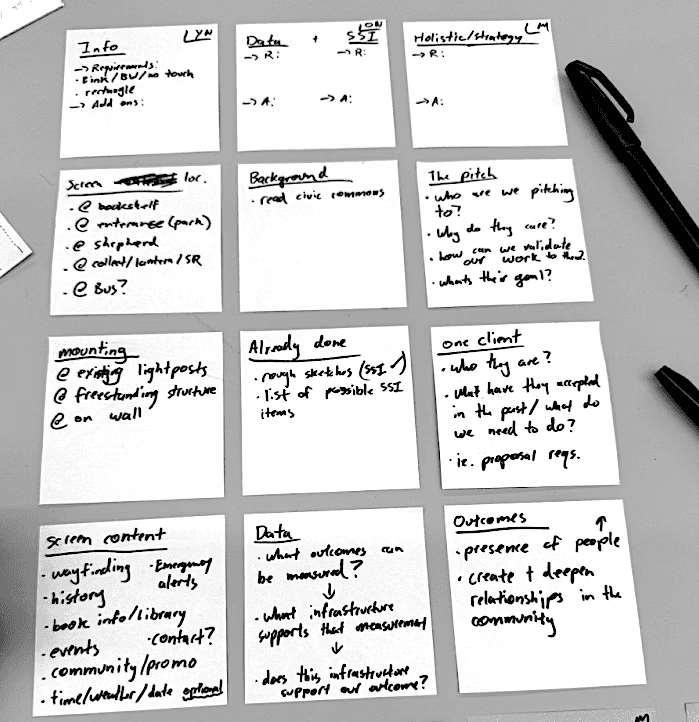
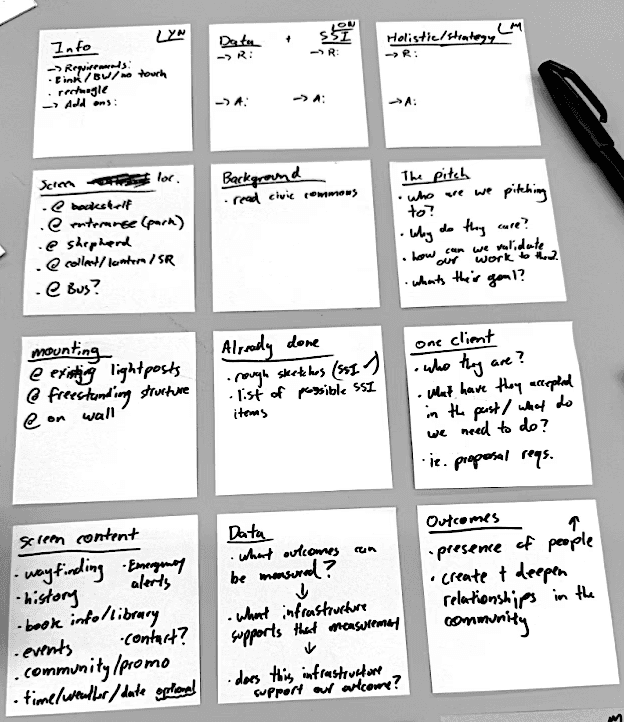
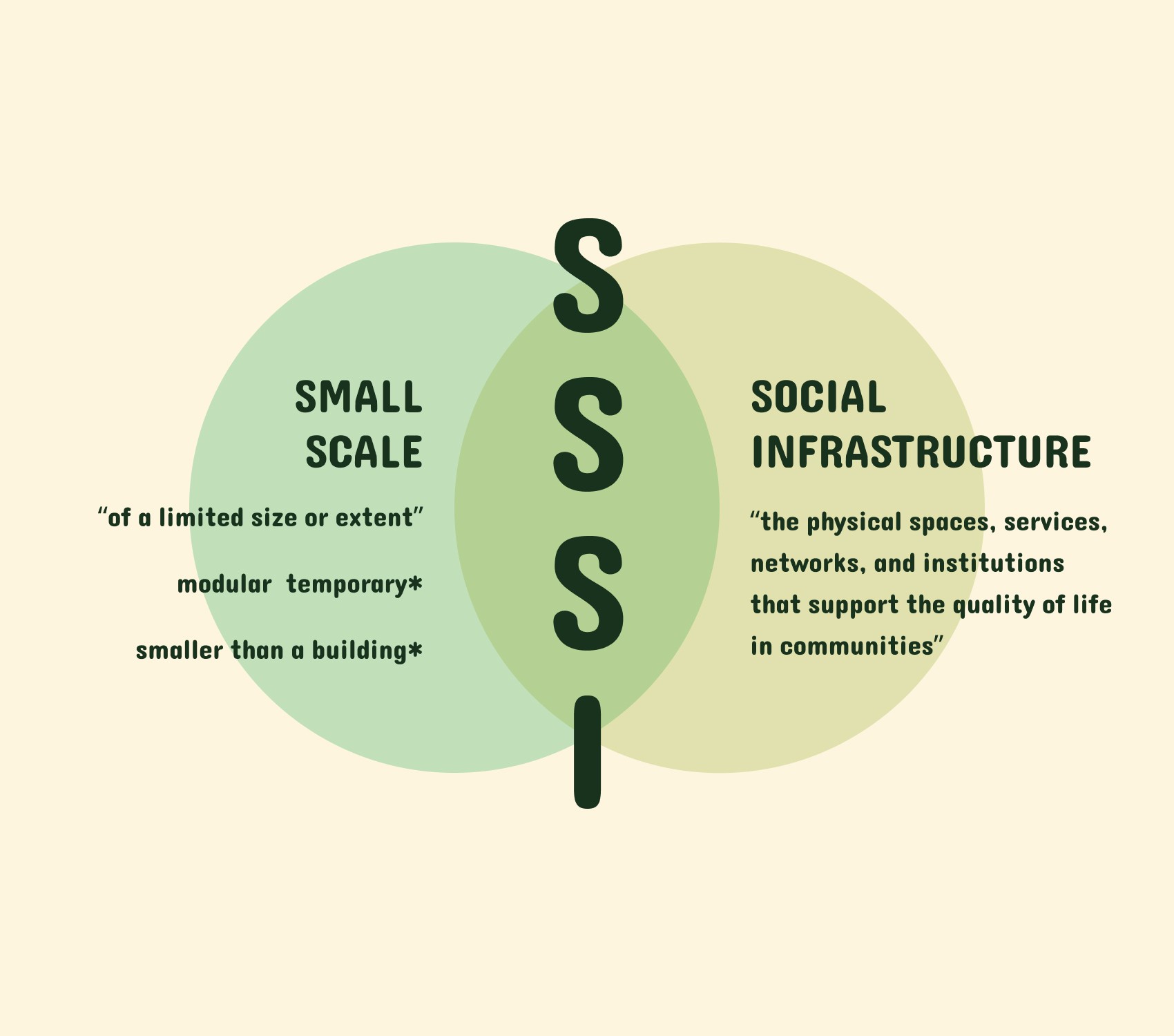
This plan is designed to encourage social mixing through something we coined as Small Scale Social Infrastructure (SSSI). The term is made up of two key components. Small scale to us means temporary and modular, allowing it to be easily adaptable and implemented in the short term. Social infrastructure is what supports the quality of life in communities. This typically includes libraries, parks, community centers, and schools.
This strategy focuses on two key SSSIs: a collection of little free libraries and digital community boards, both anchored within a small park at the center of the neighborhood.
This plan is designed to encourage social mixing through something we coined as Small Scale Social Infrastructure (SSSI). The term is made up of two key components. Small scale to us means temporary and modular, allowing it to be easily adaptable and implemented in the short term. Social infrastructure is what supports the quality of life in communities. This typically includes libraries, parks, community centers, and schools.
This strategy focuses on two key SSSIs: a collection of little free libraries and digital community boards, both anchored within a small park at the center of the neighborhood.
This plan is designed to encourage social mixing through something we coined as Small Scale Social Infrastructure (SSSI). The term is made up of two key components. Small scale to us means temporary and modular, allowing it to be easily adaptable and implemented in the short term. Social infrastructure is what supports the quality of life in communities. This typically includes libraries, parks, community centers, and schools.
This strategy focuses on two key SSSIs: a collection of little free libraries and digital community boards, both anchored within a small park at the center of the neighborhood.
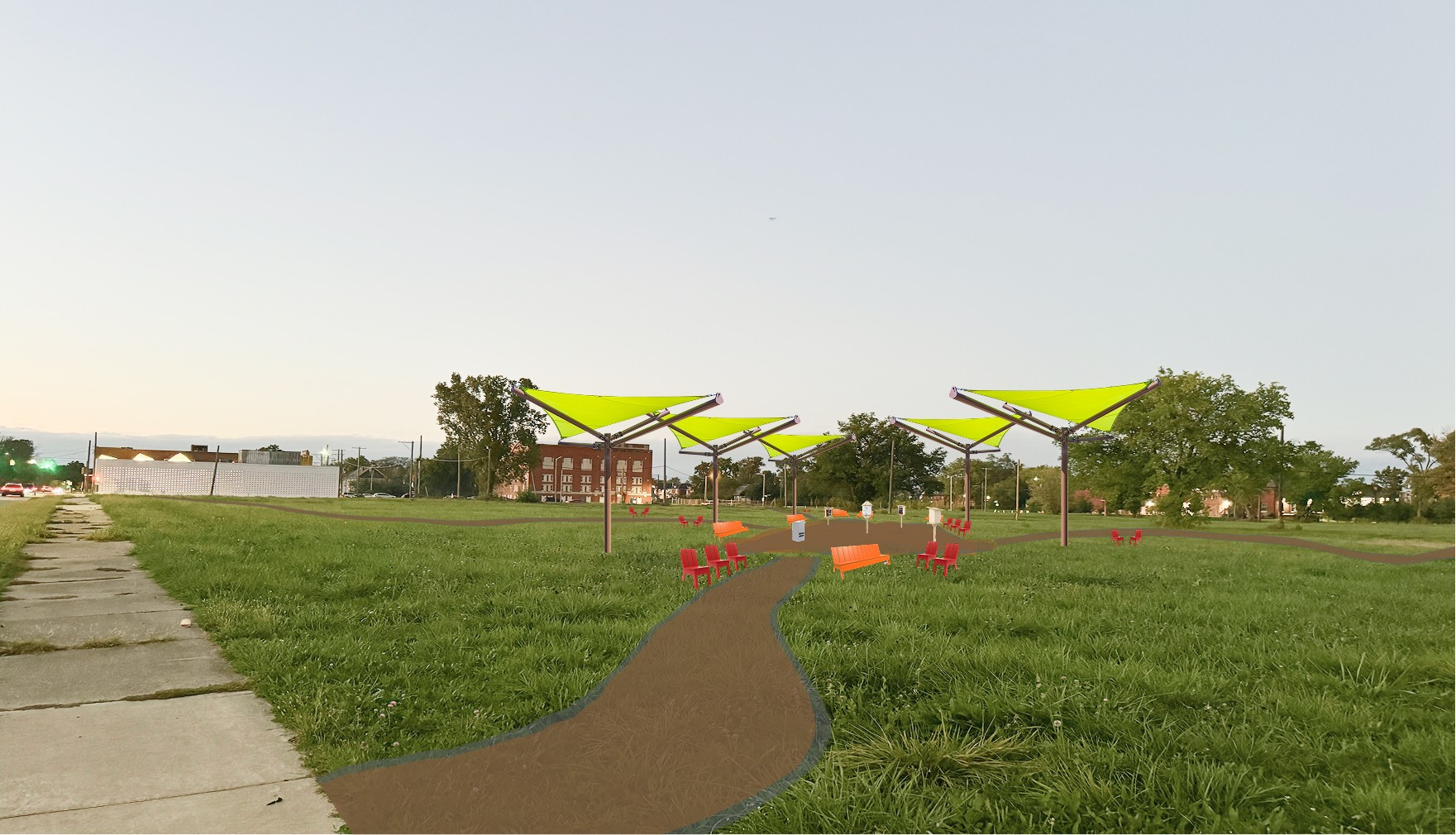
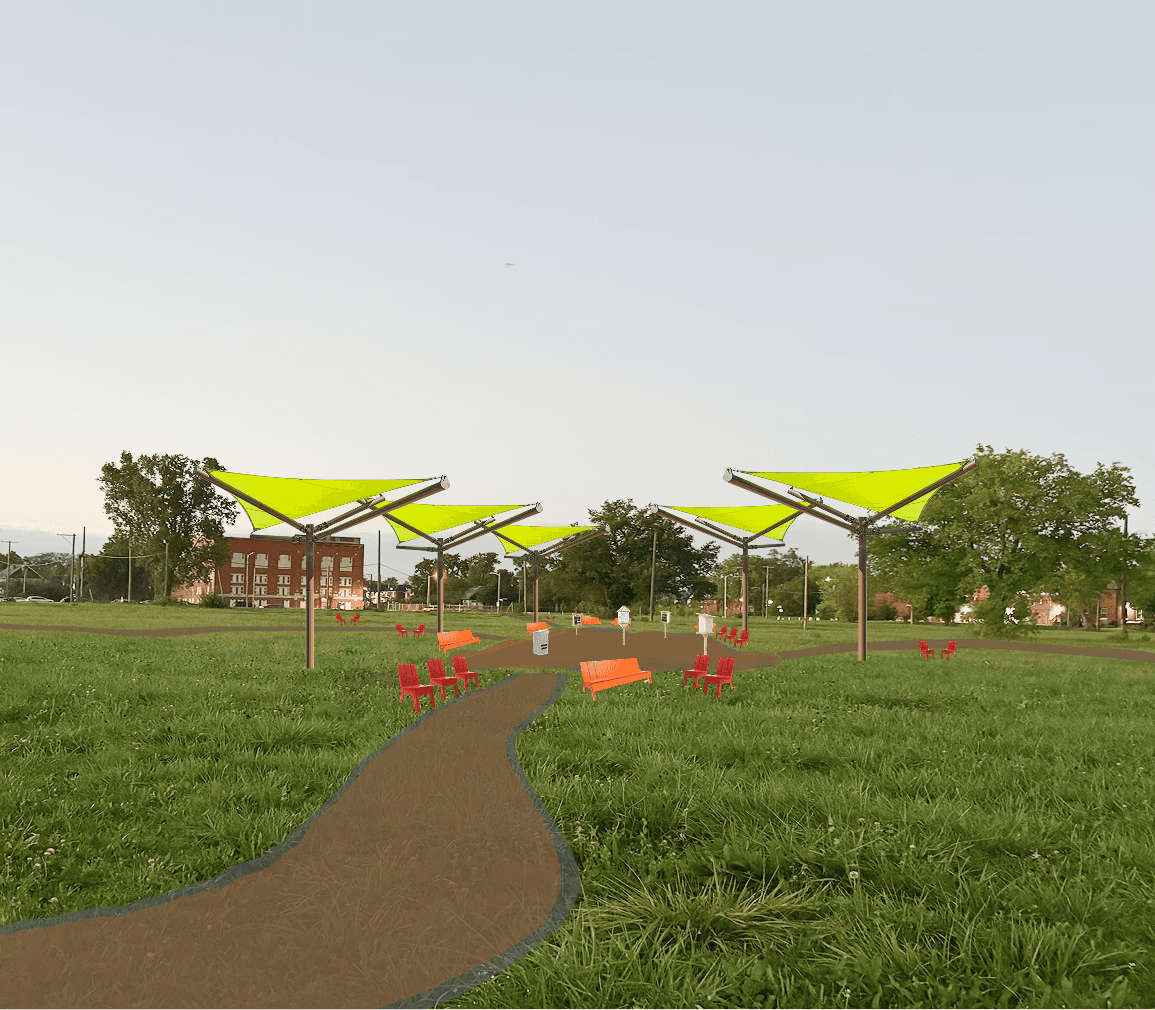
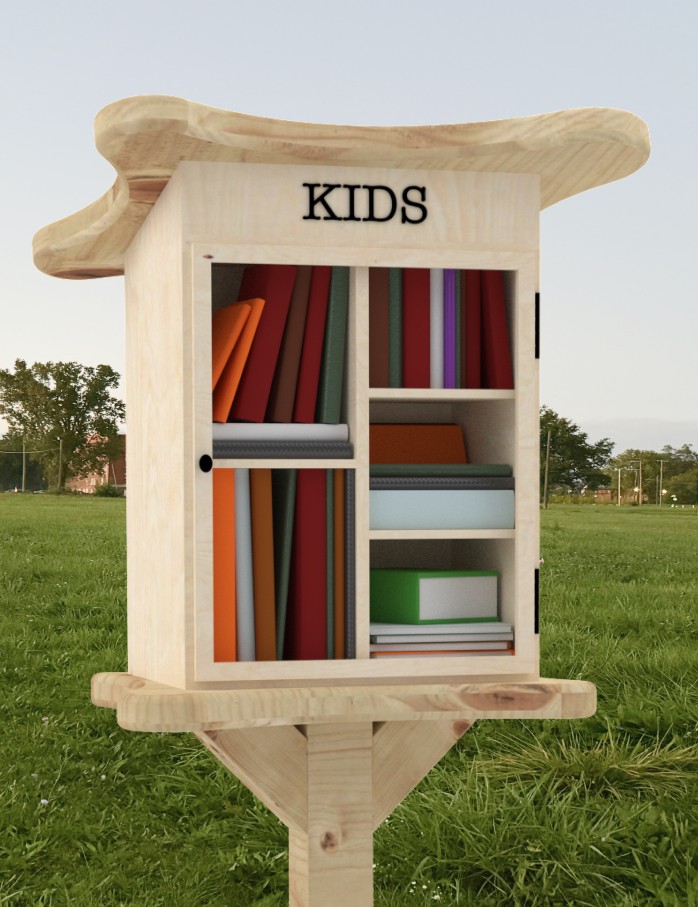
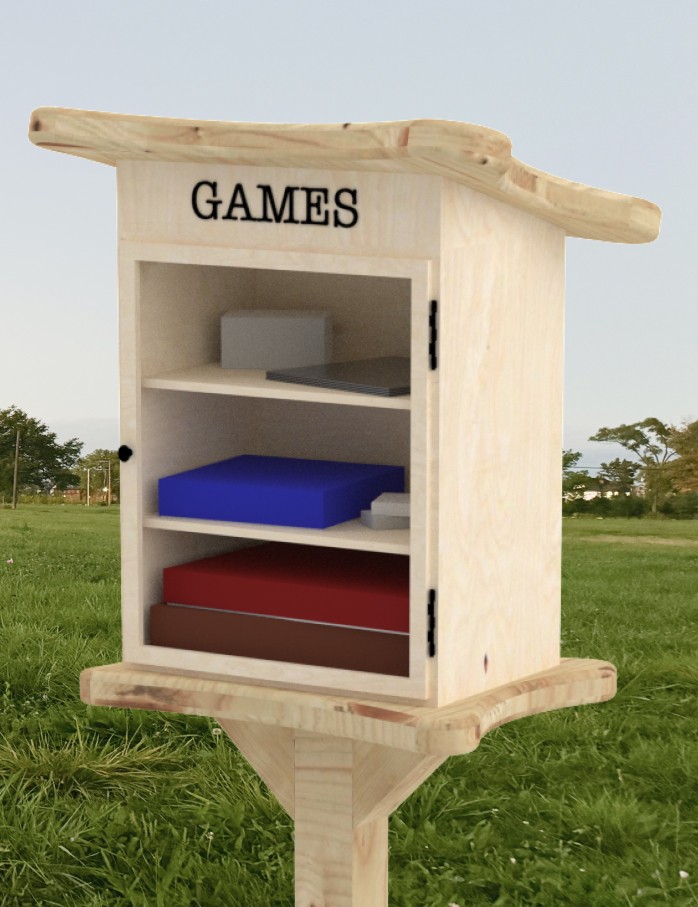
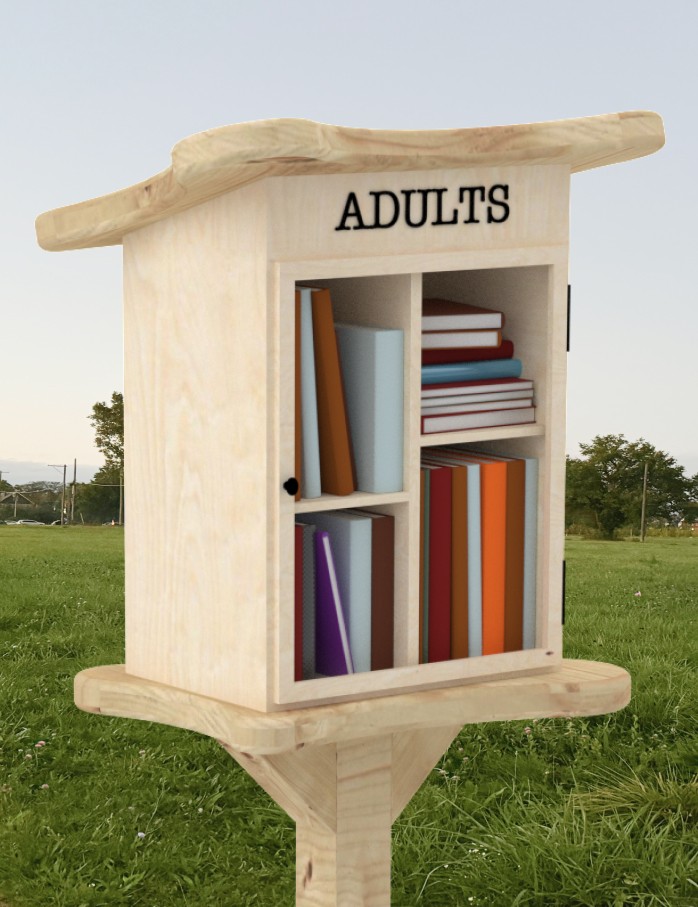
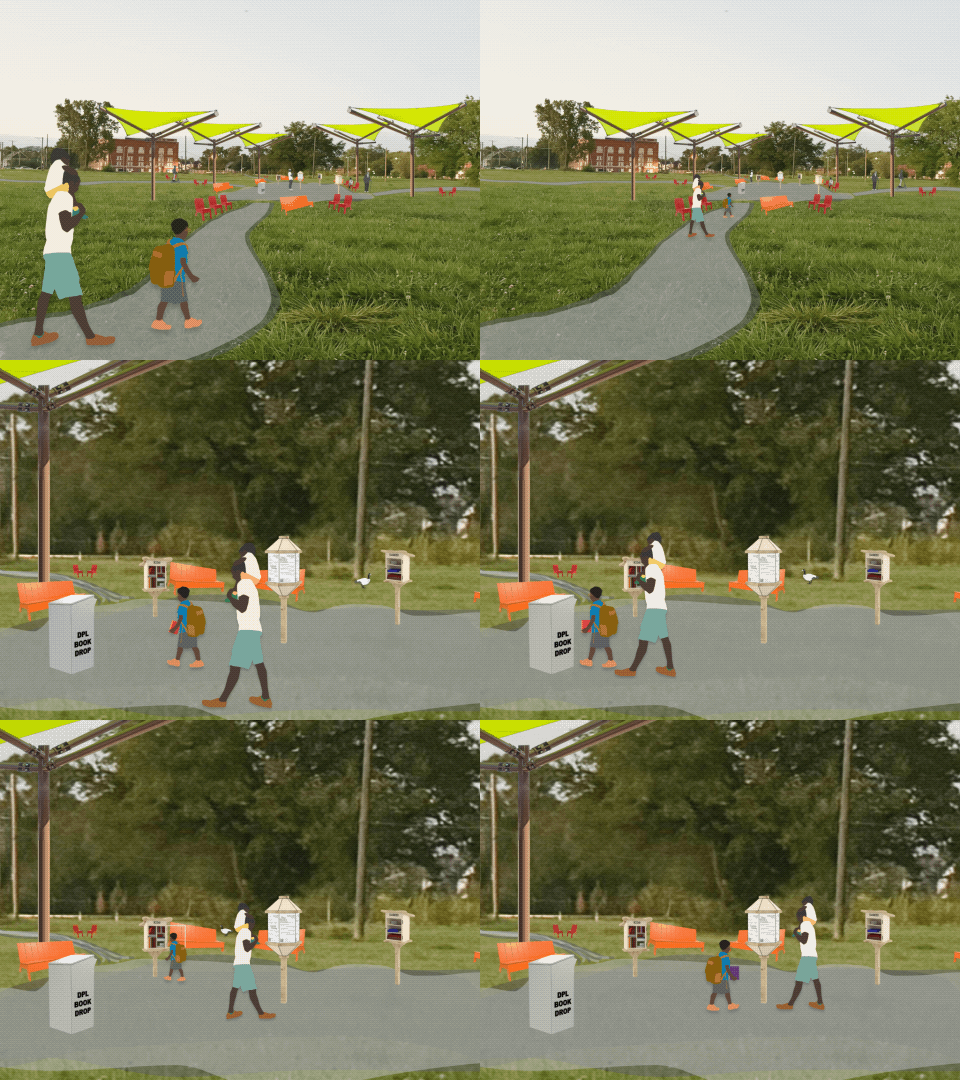
There are three little free libraries in the park, two for books (kids and adults), and one for games and other supplies. Each of them are open 24/7 for anyone to donate, borrow, or return items. Their success thrives on the goodwill and stewardship of the community.
In partnership with the Detroit Public Library, their library on wheels (aka Bookmobile) would visit the park every Sunday to provide the community with access to additional books, computers, free WiFi, and a printer. The park would provide a convenient drop off bin for visitors to return any books from the public library, along with seating and shade to comfortably accommodate long visits.
There are three little free libraries in the park, two for books (kids and adults), and one for games and other supplies. Each of them are open 24/7 for anyone to donate, borrow, or return items. Their success thrives on the goodwill and stewardship of the community.
In partnership with the Detroit Public Library, their library on wheels (aka Bookmobile) would visit the park every Sunday to provide the community with access to additional books, computers, free WiFi, and a printer. The park would provide a convenient drop off bin for visitors to return any books from the public library, along with seating and shade to comfortably accommodate long visits.
There are three little free libraries in the park, two for books (kids and adults), and one for games and other supplies. Each of them are open 24/7 for anyone to donate, borrow, or return items. Their success thrives on the goodwill and stewardship of the community.
In partnership with the Detroit Public Library, their library on wheels (aka Bookmobile) would visit the park every Sunday to provide the community with access to additional books, computers, free WiFi, and a printer. The park would provide a convenient drop off bin for visitors to return any books from the public library, along with seating and shade to comfortably accommodate long visits.
There are three little free libraries in the park, two for books (kids and adults), and one for games and other supplies. Each of them are open 24/7 for anyone to donate, borrow, or return items. Their success thrives on the goodwill and stewardship of the community.
In partnership with the Detroit Public Library, their library on wheels (aka Bookmobile) would visit the park every Sunday to provide the community with access to additional books, computers, free WiFi, and a printer. The park would provide a convenient drop off bin for visitors to return any books from the public library, along with seating and shade to comfortably accommodate long visits.
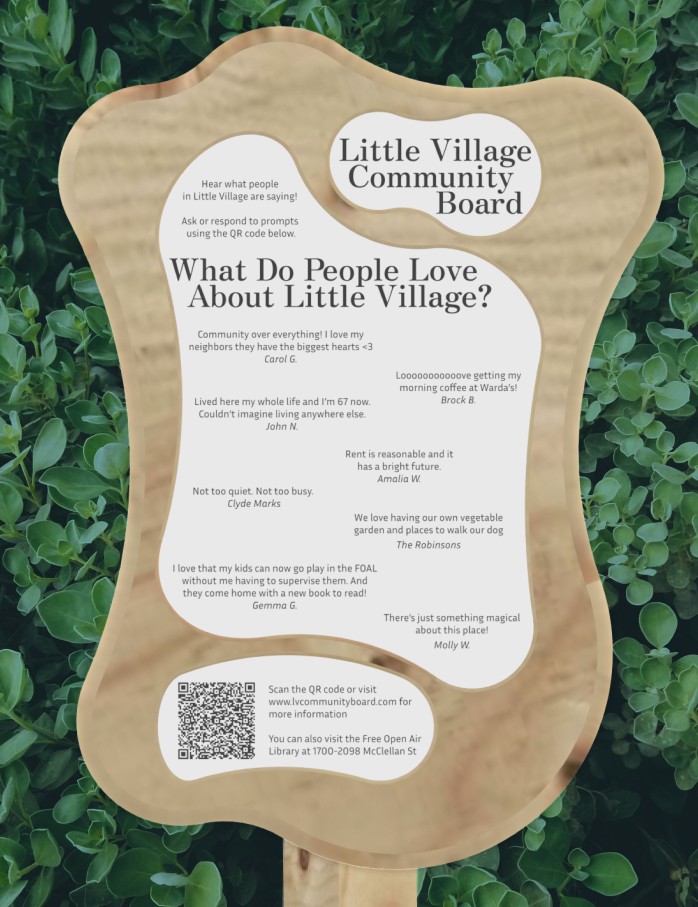
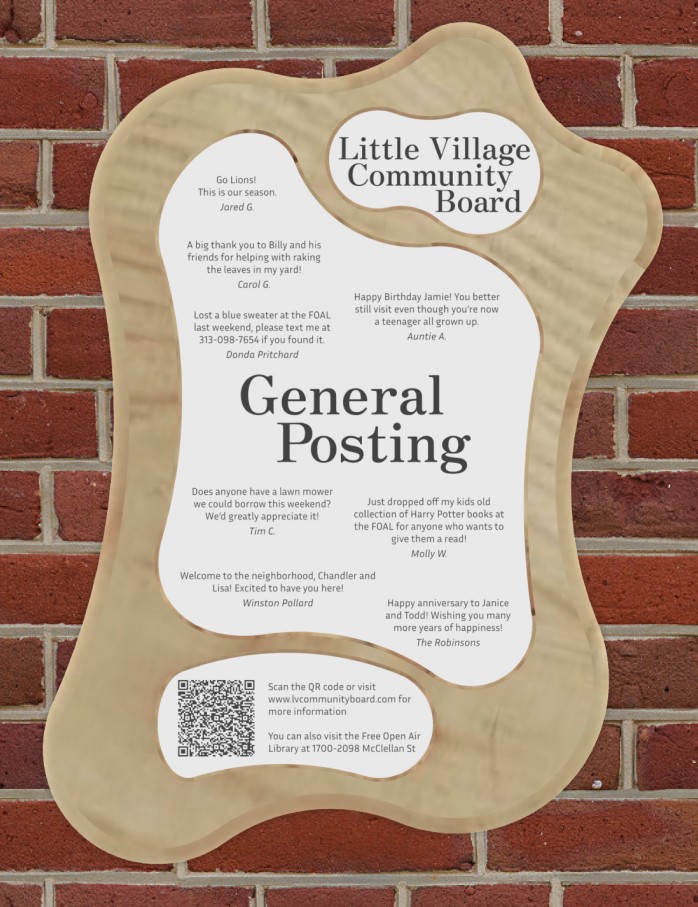
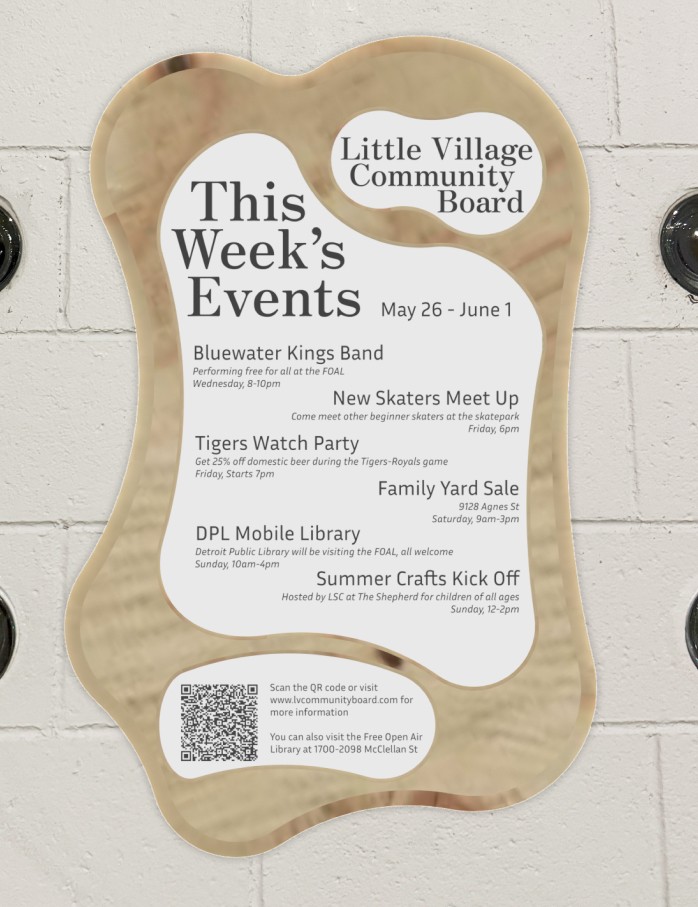
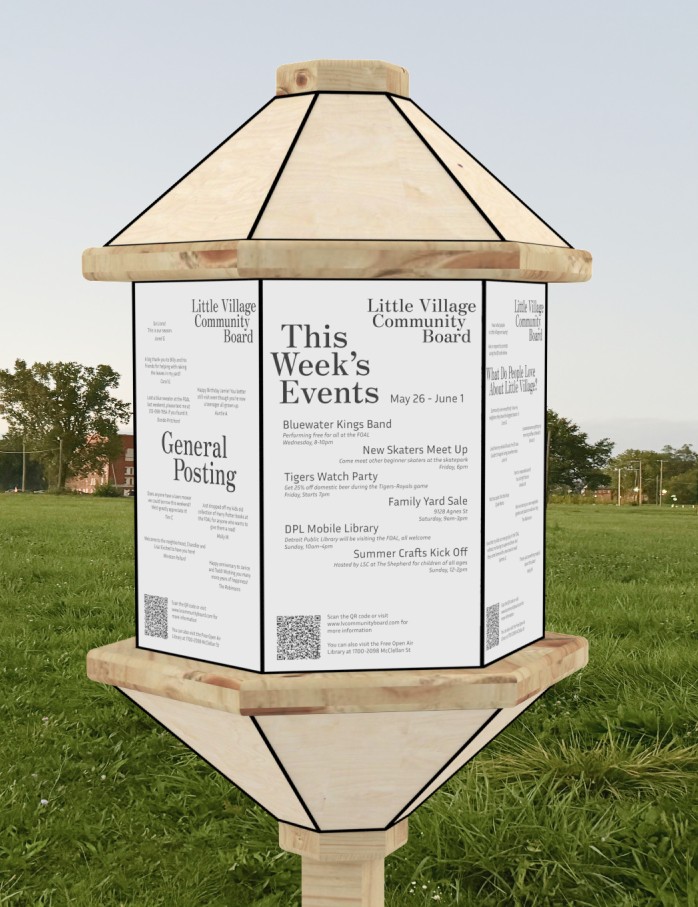
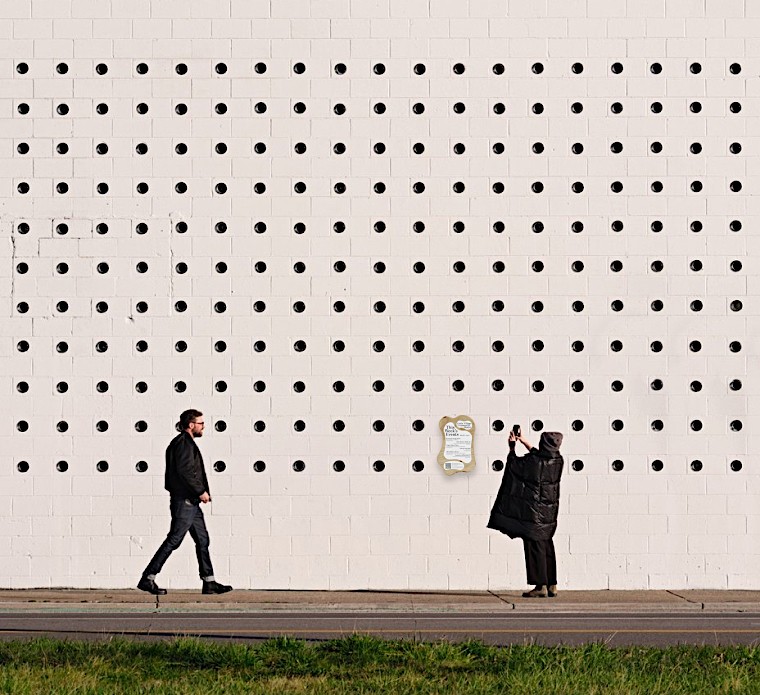
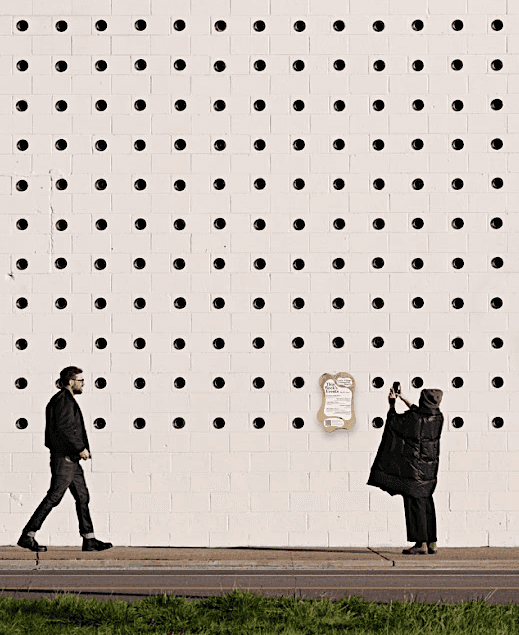
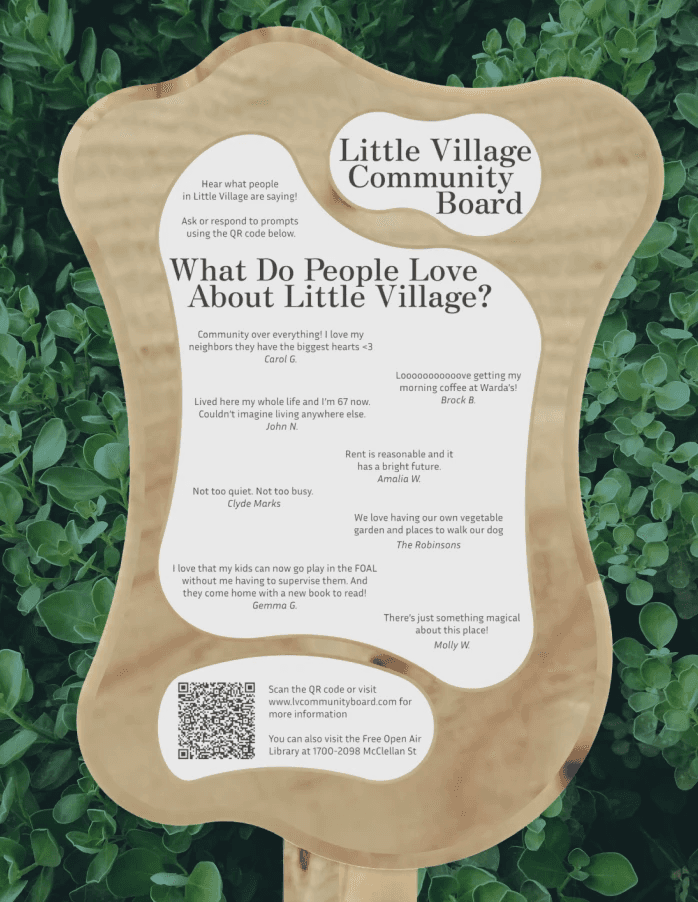
There are multiple digital community boards scattered around Little Village with the main one located within the park (left image). Each has a unique wooden frame and a standard layout for brand identity and recognizability.
The boards alternate between general messages, prompted answers, and event postings. All of which are populated through our website that’s accessible through the QR code or url on the boards.
There are multiple digital community boards scattered around Little Village with the main one located within the park (left image). Each has a unique wooden frame and a standard layout for brand identity and recognizability.
The boards alternate between general messages, prompted answers, and event postings. All of which are populated through our website that’s accessible through the QR code or url on the boards.
There are multiple digital community boards scattered around Little Village with the main one located within the park (left image). Each has a unique wooden frame and a standard layout for brand identity and recognizability.
The boards alternate between general messages, prompted answers, and event postings. All of which are populated through our website that’s accessible through the QR code or url on the boards.
There are multiple digital community boards scattered around Little Village with the main one located within the park. Each has a unique wooden frame and a standard layout for brand identity and recognizability.
The boards alternate between general messages, prompted answers, and event postings. All of which are populated through our website that’s accessible through the QR code or url on the boards.
— — —
For someone stumbling into the park for the first time, our website’s home page gives context to what’s there and its many uses.
— — —
Our user interface prioritizes converting online visits to in-person park visits.
— — —
The full user experience requires being in or around the park to encourage more activity and chances of social mixing.
— — —
For someone stumbling into the park for the first time, our website’s home page gives context to what’s there and its many uses.
— — —
Our user interface prioritizes converting online visits to in-person park visits.
— — —
The full user experience requires being in or around the park to encourage more activity and chances of social mixing.
— —
Scanning the boards’ QR code brings the user directly to the community board page of the website.
— —
Here, users can choose what to add to the boards, locate a board if they aren’t already at one, and get more detailed information on the local events.
— —
Scanning the boards’ QR code brings the user directly to the community board page of the website.
— —
Here, users can choose what to add to the boards, locate a board if they aren’t already at one, and get more detailed information on the local events.
— —
There are multiple weekly prompts for users to easily engage with.
— —
The playful visual design caters to all ages, allowing anyone to contribute as they wish.
— —
There are multiple weekly prompts for users to easily engage with.
— —
The playful visual design caters to all ages, allowing anyone to contribute as they wish.
— —
General messages help facilitate neighborhood announcements.
— —
It provides an opportunity for residents to reach out and make connections.
— —
General messages help facilitate neighborhood announcements.
— —
It provides an opportunity for residents to reach out and make connections.
— — —
Lastly, residents can share their events from yard sales to book clubs.
— — —
Local businesses can advertise special events open to the public.
— — —
Submissions to the boards would be moderated to ensure adherence to community guidelines.
— — —
Lastly, residents can share their events from yard sales to book clubs.
— — —
Local businesses can advertise special events open to the public.
— — —
Submissions to the boards would be moderated to ensure adherence to community guidelines.
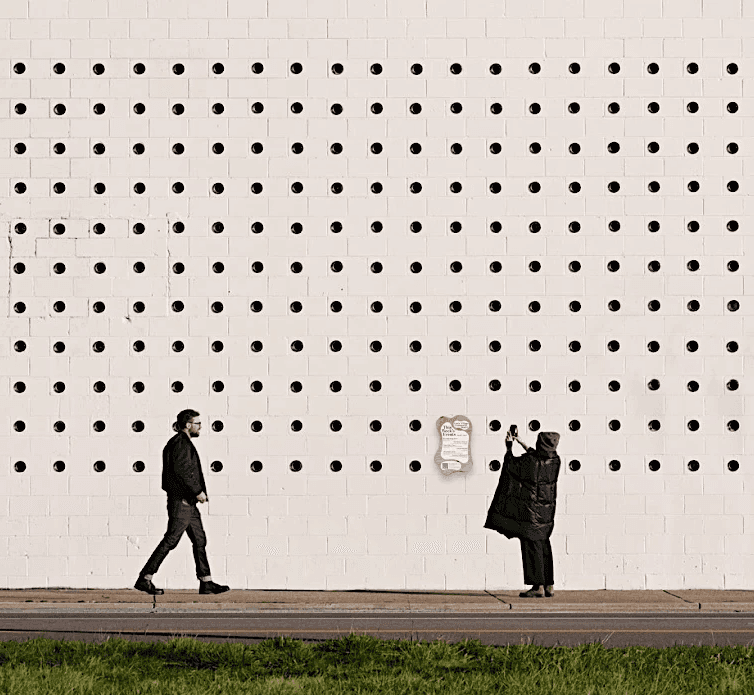
original photo credit: librarystreetcollective
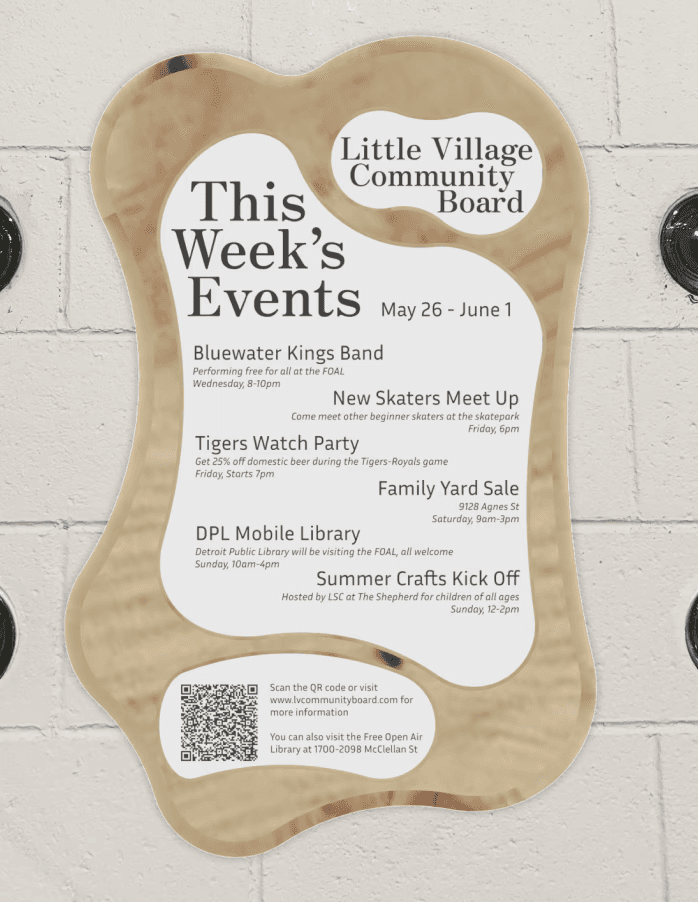
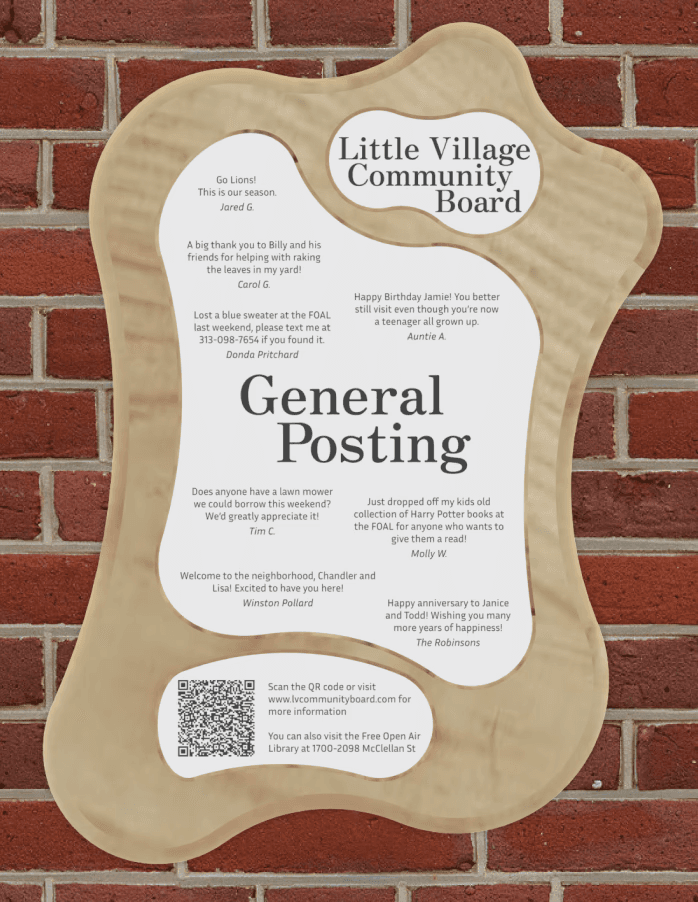
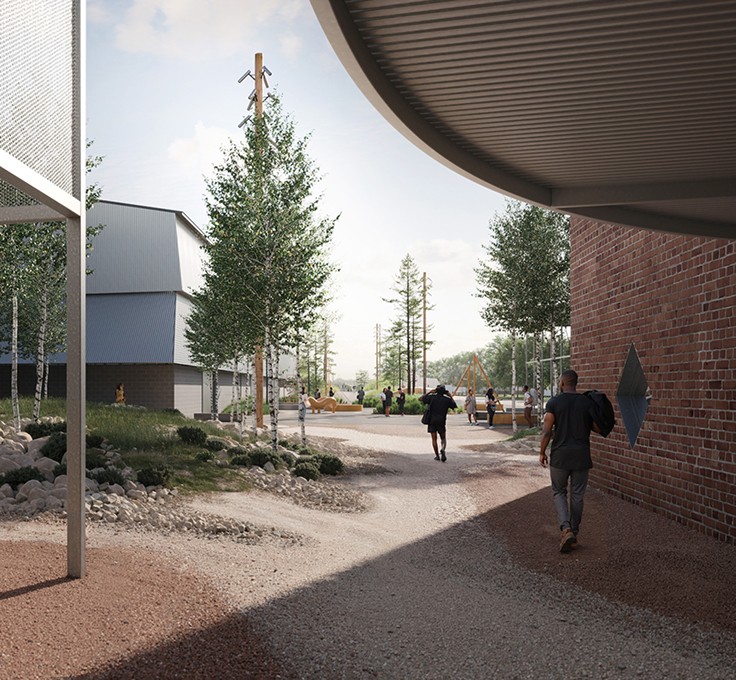
rendering credit: librarystreetcollective
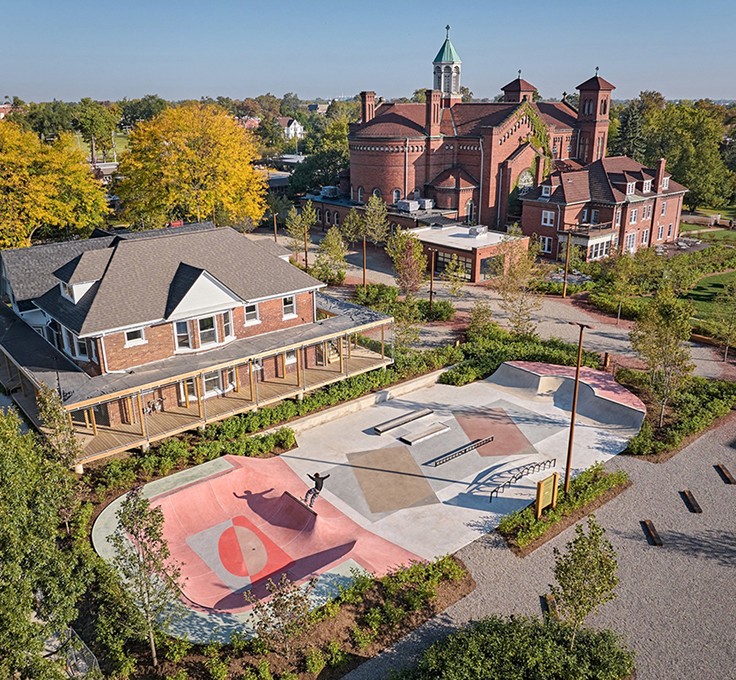
photo credit: librarystreetcollective
With Small Scale Social Infrastructure, we hope to demonstrate a demand for permanent, community-centered social infrastructure in the future.
Through trial periods, data collection, and community stewardship, this strategy reframes development as an ongoing conversation between residents, designers, and developers, resulting in a built environment that better reflects the community it serves.
With Small Scale Social Infrastructure, we hope to demonstrate a demand for permanent, community-centered social infrastructure in the future.
Through trial periods, data collection, and community stewardship, this strategy reframes development as an ongoing conversation between residents, designers, and developers, resulting in a built environment that better reflects the community it serves.
With Small Scale Social Infrastructure, we hope to demonstrate a demand for permanent, community-centered social infrastructure in the future.
Through trial periods, data collection, and community stewardship, this strategy reframes development as an ongoing conversation between residents, designers, and developers, resulting in a built environment that better reflects the community it serves.
(04)
(04)
OO
OO
. .
. .